
A day of insight and enlightenment in the world of facade engineering

At Henriksen Studio, we are committed to continuous training and improvement – across both our facade engineering and our Passivhaus design practices. We encourage the sharing of knowledge, and we are always striving to support the ongoing development and progression of each and every member of our team.
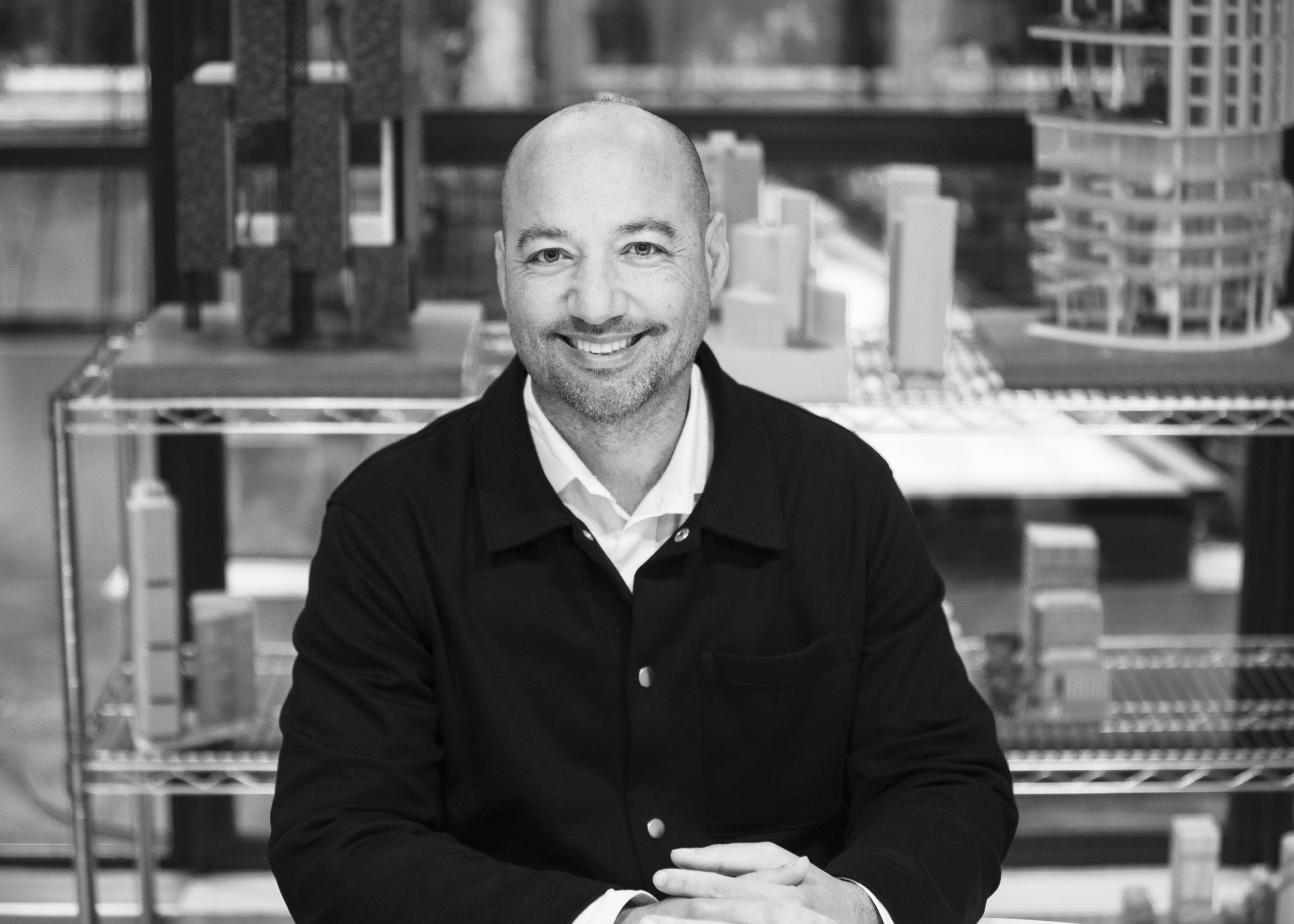
Only last week, we were lucky enough to host Prof. Dr. Ing. Ulrich Knaack in our London studio. Besides being one of our Non-Executive Directors here at Henriksen Studio, Ulrich is also Professor at TU Delft and TU Darmstadt, two of the most prestigious technical universities in Europe.
Ulrich ran a company-wide technical session, where he reminded the team why facade engineering is best learned through real buildings and honest questions.
Our very own Adam Pollonais, Associate Facade Project Lead here at Henriksen Studio shares with us a fascinating day of insight and enlightenment.
Ulrich arrived with a clarity that immediately set the tone. Not the usual visiting expert who begins with a slide deck and a conclusion, but someone who starts by listening, then quietly turns the room into a shared instrument. His introduction was simple and disarming. Every facade decision, he explained, becomes a compromise in the end. The only way to make those compromises intelligently is to first name the forces at play.
But before any frameworks were introduced, before any criteria were named, Ulrich asked us to draw.
Not precedent projects. Not idealised details. Our own facades.
Our homes became the starting point. Buildings we know intimately, not because we have studied them, but because we live inside their consequences.
Ulrich was explicit about why this mattered. Before you can talk about performance, sustainability, or innovation, you must first surface what you actually have.
Drawing, in this context, was not about representation. It was a diagnostic act. A way of forcing latent knowledge into the open. Where is the structure. Where does the facade actually sit. What is solid, what is lightweight. What is assumed, and what is known.
By drawing our own facades, the safety net of abstraction disappeared. There was nowhere to hide behind typologies or standards. Every omission in a sketch revealed an uncertainty. Every hesitation exposed a question not yet asked. This, Ulrich made clear, is precisely why he starts this way. Engineers do not fail when they lack information. They fail when they assume it.
Only once this baseline was established did the discussion begin to expand.
Facade engineering: driven by lived experience
The drawings immediately pulled the conversation into lived experience.
Overheating. Stale air. Dry interiors. Mould. Cold bridges felt at the edge of a window. Balconies that look generous on drawings but behave very differently in use. The buildings began to speak back to us, not as diagrams, but as environments.
Then he did something quietly brilliant. He introduced structure.
Ulrich asked us to imagine a checklist that could sit above every project, not as a compliance tool, but as a way of thinking. A set of lenses that would keep us honest as we design. Structure. Building physics. Circularity. Envelope systems.
Health and safety. Serviceability. Cost. Quality.
He allowed the list to grow in real time, because the point was never to enforce a fixed taxonomy. The point was to demonstrate how you build one. How you decide what matters. How you articulate it. How you hold yourself accountable when a project becomes complex and noisy.
Crucially, this checklist did not replace the drawings. It sat on top of them. Each category became a way of returning to what we had already sketched and discussed, while seeing it more clearly.
From there, the journey unfolded like a masterclass in applied judgement.
We began in the most grounded place: lived experience. A flat that feels stale even with windows open. Winter warmth that becomes summer overheating. The familiar contradiction of modern buildings that are sealed and insulated, yet somehow feel airless or uncomfortable. Ulrich treated these comments with respect, but never let them remain anecdotal. Each observation became a diagnostic prompt. Is the system extract only, or supply and extract. Where does the air enter, where does it leave. Is the plan deep and double loaded. Is cross ventilation real or theoretical. What is the measured humidity, and what is the perceived air quality.
The room could feel the shift as everyday discomfort was translated into a sequence of technical questions. This is one of Ulrich’s great strengths: making the invisible legible without flattening its complexity.
From ventilation, we moved naturally into building physics.
Building physics: challenging assumptions
He challenged assumptions with a precision that was almost playful. What is evidence-based improvement, and what is simply a reflex list of best practice items. He used windows as teaching objects because everyone understands windows, and yet windows are never simple. Gaskets. Thermal breaks. Low-e coatings. Solar control. Opening modes. Cleaning access. The discussion moved fluidly between detail and principle, but always with purpose. Performance, he reminded us, is not a collection of features. It is an outcome. And outcomes are earned through coherence.
Circularity entered the conversation not as an add-on, but as a consequence of how we think.
Circularity: the facade engineering challenge
Could the window be repurposed. Could the bricks be reused. What happens when labour becomes the dominant cost rather than material. Where do warranties help, and where do they obstruct progress. Ulrich was candid about the uncomfortable truth that reuse is rarely cheaper in monetary terms, yet can be cheaper in the metrics that matter most when it is planned with discipline. Circularity, he made clear, is not an ideology. It is an engineering problem of sequencing, responsibility, and risk.
Throughout all of this, sketching remained central.
Details were tested in real time. Insulation lines shifted. Sills extended. Junctions were questioned. The room was reminded that while digital tools continue to advance, the ability to sketch clearly and reason spatially remains fundamental. The sketch is where assumptions are exposed and compromises become visible.
Ulrich did not treat details as defensive exercises. He treated them as design. He questioned chamfered reveals to protect window size, insulation lines that risked future moisture problems, and dew point strategies that overcomplicated otherwise robust walls. He asked what we sacrifice when we keep an elevation pure, and what we sacrifice when we chase performance without regard for character. Making compromises visible, he showed, is the only way to make them intelligent.
He spoke about performance curves, about the point where additional insulation thickness yields diminishing returns, and about the often-ignored energy cost of making the thing you are adding. He referenced academic rules of thumb not as dogma, but as hard-won lessons. This was not a dismissal of high performance. It was a lesson in judgement. The question was never can we do more, but what does more actually buy us, and what does it cost over time.
A theme that quietly threaded through the entire session was serviceability.
Not as an afterthought, but as a marker of seriousness. Cleaning access at height. Windows that do not open in ways that respect real life. Corridors that are warmer than flats. Extract fans that only run during showers. Ulrich used these examples to point to a bigger truth: buildings fail more often through overlooked maintenance and user behaviour than through dramatic technical errors. A facade that cannot be maintained is not merely inconvenient. It is a design failure that compounds year after year.
And then, just as the room settled into the familiar territory of constraints, the doors opened to speculation. Not whimsical speculation. Disciplined speculation.
Industry innovations
Second skins. Greenhouse envelopes. Active facades that breathe, shade, and adapt. Intermediate spaces that act as regulated buffers between inside and outside.
Ulrich spoke about how innovation enters the industry, not through single breakthroughs, but through pipelines. Research. Prototypes. Demonstration.
Productisation. Market adoption. The calm truth that only a fraction of PhD work becomes a product, and that this is not failure, but the cost of progress. Trade fairs were framed not as spectacle, but as knowledge infrastructure, where future realities appear long before they are normalised.
There was a generosity in how he did this.
Innovation was never presented as distant from daily practice. It was framed as an extension of the same thinking that resolves a sill detail properly, simply scaled into the future. The message was subtle but unmistakable. The difference between routine design and meaningful design is not talent alone. It is curiosity disciplined by rigour.
Perhaps the most important thing Ulrich gave us today was not a list of solutions.
He spoke to a room full of people who already understand thermal bridges, condensation risk, planning constraints, and construction tolerances. And yet he still expanded the room’s thinking. He did it by refusing to simplify. By staying precise. By treating every question as an entry point to a deeper principle. By holding the technical and the human in the same frame.
It is rare to host someone whose knowledge is broad, whose recall is sharp, and whose instinct is to build others up rather than perform expertise.
That is why this felt like more than a workshop.
It felt like a reminder of the asset we have at Henriksen Studio when we create space for this kind of conversation. Not only because we learned something new, but because we were shown, in real time, how high-level thinking is constructed. How it moves from observation to hypothesis, from hypothesis to decision, and from decision to detail.
Thank you, Ulrich, for a generous and demanding session, and for helping build the kind of technical community that makes our practice stronger.


