
The sustainable building materials driving the future of facades

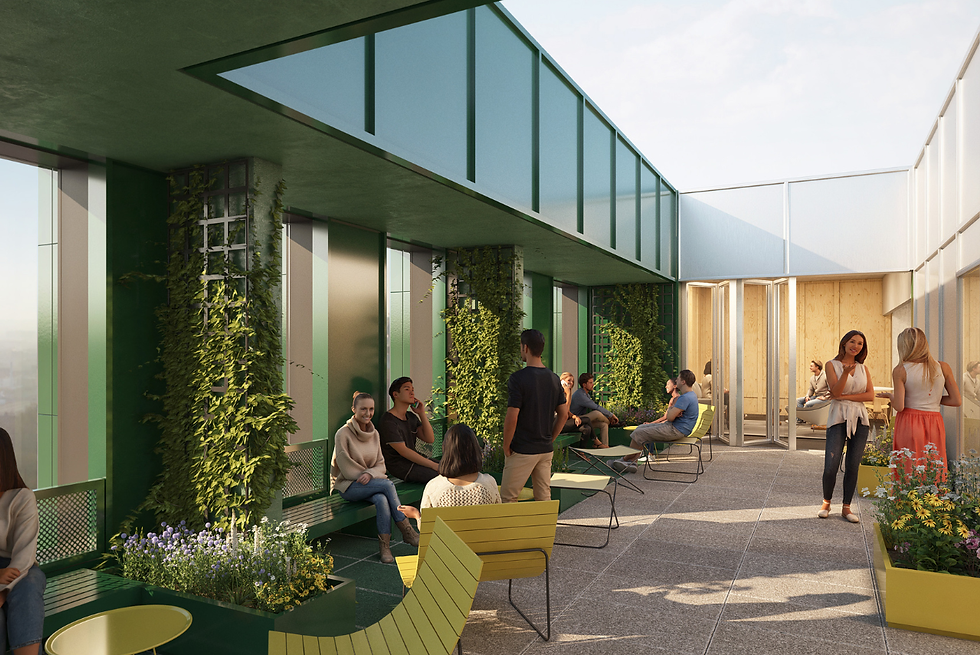
The facade is a critical component in the environmental performance of a building and a key driver in how architecture responds to the climate, to regulations and to the end user. At Henriksen Studio, as facade consultants and Passivhaus designers, we have witnessed a clear shift towards the use of sustainable building materials and integrated technologies, which support both energy efficiency and long-term resilience.
Facades sit at the intersection of multiple performance requirements. They must manage heat loss, solar gain, moisture, air movement and daylight, all while responding to structural and aesthetic demands. This makes them central to the building’s sustainability strategy.
Selecting the right, sustainable building materials for any building’s facade requires a whole-life perspective. It is not enough to focus on initial performance. Materials must also be durable, maintainable and capable of reuse or recycling at end of life.
Sustainable building materials have a lower environmental impact across their entire life cycle - from how they are responsibly sourced, manufactured, and transported, to how they are used, and ultimately disposed of or reused. By embracing circularity, these materials are often given a second life rather than being discarded.
Emerging sustainable building materials in facade design
A number of materials are gaining traction as the industry moves towards lower carbon construction. High-performance glazing continues to evolve, offering improved thermal performance alongside better solar control, while low-carbon concrete alternatives are being developed.
However, we believe that material innovation is often most effective when combined with intelligent design. For example, optimising a facade’s geometry – its shape and positioning - can reduce solar gain and improve daylight penetration without relying solely on material performance. This highlights the importance of early-stage collaboration between architects, engineers and facade consultants.
At Henriksen Studio, we are at the forefront of sustainable building design. We work with clients across projects of varying scale to ensure that they are not only aesthetically pleasing but meet increasingly stringent energy efficiency requirements and standards.
Our team is passionate about the development and advancement of new materials, new technologies and new, sustainability-led design principles – which we incorporate into our projects, wherever feasible. In this month’s article, we have asked some of our technical team the question: What sustainable material, technology or principle are you most excited about right now?
Here is what they had to say…
Maria Cipriani, Facade Consultant: bioreceptive concrete and living facades
The sustainable material that excites me most right now is bioreceptive concrete, especially for facades and urban buildings. These special panels are designed to encourage the growth of moss, lichens, algae, or even small plants. The panels help filter air, absorb carbon, reduce urban heat, and add pockets of biodiversity without the soil, irrigation systems, or maintenance required by traditional green walls.
It offers clear ecological benefits, although it doesn’t remove the carbon footprint of cement itself. However, its ability to turn building surfaces into living environmental contributors makes it a promising material for future cities.
Viola Allen, Senior Passivhaus Designer: airtightness and ambient loop technology
For me, airtightness is one of the most important - and sometimes underestimated - aspects of sustainable design. It reduces heat loss, improves comfort, and protects the building fabric.
Once you’ve increased insulation and addressed thermal bridges, uncontrolled air movement can still cause major energy losses if airtightness isn’t considered. It’s also about comfort - air leaks can create cold drafts that make interiors feel less pleasant.
And beyond that, airtightness helps protect the structure from moisture damage. It’s not about making a building “non-breathable,” but about controlling how air and moisture move through it - which makes all the difference in performance and durability.
Ambient loop technology involves a communal, low-temperature heat network that circulates water at near-ambient temperatures between different areas or buildings.
What I really like about the ambient loop system is how efficiently it minimises heat loss. Instead of circulating high-temperature water like traditional systems, it moves water at a much lower, “ambient” temperature - usually between 15 and 30°C.
Because the temperature difference with the surrounding environment is so small, there’s far less energy wasted during distribution - in fact, heat losses can be reduced by up to 90%. It’s a simple but brilliant concept that makes a huge difference in overall building performance.
Warren Stanley, Associate Passivhaus Designer: energy demand reduction
Without question, the principle of energy demand reduction (specifically through a well-constructed building envelope) is the sustainable building principle which makes the biggest impact. Reducing heating and cooling loads at source makes the entire system design simpler, more resilient, and ultimately more affordable to operate over time.
Ayman Abziouad, Facade Engineer: the reuse principle
For me, it would have to be the Reuse principle. Designing buildings to not only be flexible in their use, but to also allow for their facade components to be reassigned thereafter is a crucial component of circularity.
At Henriksen Studio, we see increasing interest in facade systems that support disassembly and reuse. This is an area where early design decisions have a significant impact on future outcomes.
Irene Scudu, Senior Passivhaus Designer: bioclimatic design
I am passionate about bioclimatic design, which focuses on creating buildings that respond to the local microclimate, site conditions, sun path, and available resources.
Bioclimatic design aims to achieve thermal comfort by integrating the building with its surroundings. It can draw inspiration from vernacular architecture, where building forms, roof shapes, and windows naturally evolve to suit local climates.
Why sustainable building materials matter for developers
For developers, the adoption of sustainable building materials is increasingly tied to both regulatory requirements and market expectations. There is growing demand for buildings that demonstrate strong environmental performance and long-term value.
Facades are a visible expression of this commitment. They influence not only energy performance but also durability, maintenance and occupant comfort. Investing in high-quality, sustainable facade solutions can enhance asset value and reduce operational risk.
There is also a reputational aspect. Developers who prioritise sustainability are better positioned to respond to changing market conditions and investor expectations.
Integrating sustainable building materials with Passivhaus principles
The relationship between sustainable building materials and Passivhaus design is complementary. Passivhaus provides a rigorous framework for energy performance, while material selection addresses embodied carbon and resource efficiency.
In practice, this means selecting materials that support airtightness, insulation continuity and thermal bridge reduction, while also considering their environmental impact. It requires a detailed understanding of how materials behave in combination and over time.
At Henriksen Studio, we approach facade design as an integrated process. Material selection, detailing and performance modelling are developed together to ensure that buildings meet both energy and sustainability targets.
Explore some of our current and recent projects here.
Looking ahead
We firmly believe that the future of facades will be shaped by a combination of material innovation, technological integration and circular design principles.
Sustainable building materials will play a central role, but their effectiveness will depend on how they are applied.
As facade consultants and Passivhaus designers, our focus remains on delivering solutions that are practical, robust and aligned with long-term performance goals. The challenge is not simply to adopt new materials, but to use them in ways that enhance the overall quality and resilience of the built environment.
This requires collaboration, technical expertise and a clear understanding of building physics. When these elements come together, facades can move beyond their traditional role and become active contributors to a more sustainable future.
If you are looking for support with your future project, explore our facade engineering and Passivhaus design services, or get in touch with our team, direct.


